
TL;DR: Webflow Conf 2026 announced four things that matter for B2B SaaS teams: Source, Campaigns, Webflow AEO, and MCP 2.1 (full announcement here). Together they consolidate a marketing stack that's grown bigger than most small teams can manage, so a lean team can run campaigns, stay visible in AI search, and update content without the constant tool-switching that's been dragging them down.
The problem: your stack outgrew your headcount
The bar keeps moving higher. B2B SaaS startups need and are expected to punch far above their weight. Aggressive growth targets, accountability to investors and boards, and buyers who expect a trustworthy supplier all push marketing output higher than headcount can realistically support.
The old fix was martech stack creep. A CMS, a landing page builder, separate tools for analytics and testing, bolt-ons for SEO and for LLMs that sit disconnected from the rest of the business. It turned a small marketing team into full-time systems administrators.
Now more than ever, marketing output needs polished campaigns, sharp landing pages, consistency across touchpoints, and the ability to find the buyer with the right message at the right time. Small teams are expected to punch above their weight, but stack creep drags them down.
The solution: consolidation instead of another point tool
Here are the four announcements that matter, and what each means for your B2B SaaS team.
Source: your codebase, CMS, and docs finally in one place

What it is: One environment connecting your codebase, CMS, hosting, and existing martech, instead of marketers working in a page builder while devs work in a repo and nobody has the full picture.
Why it matters for B2B SaaS: Product docs and marketing content can finally talk to each other. Link your changelog or product docs to Webflow, and an agent can instantly update the feature tiles on your site the moment a release ships, instead of a marketer manually rewriting a pricing or features page every sprint.
Campaigns: from brief to live landing page, without the relay race
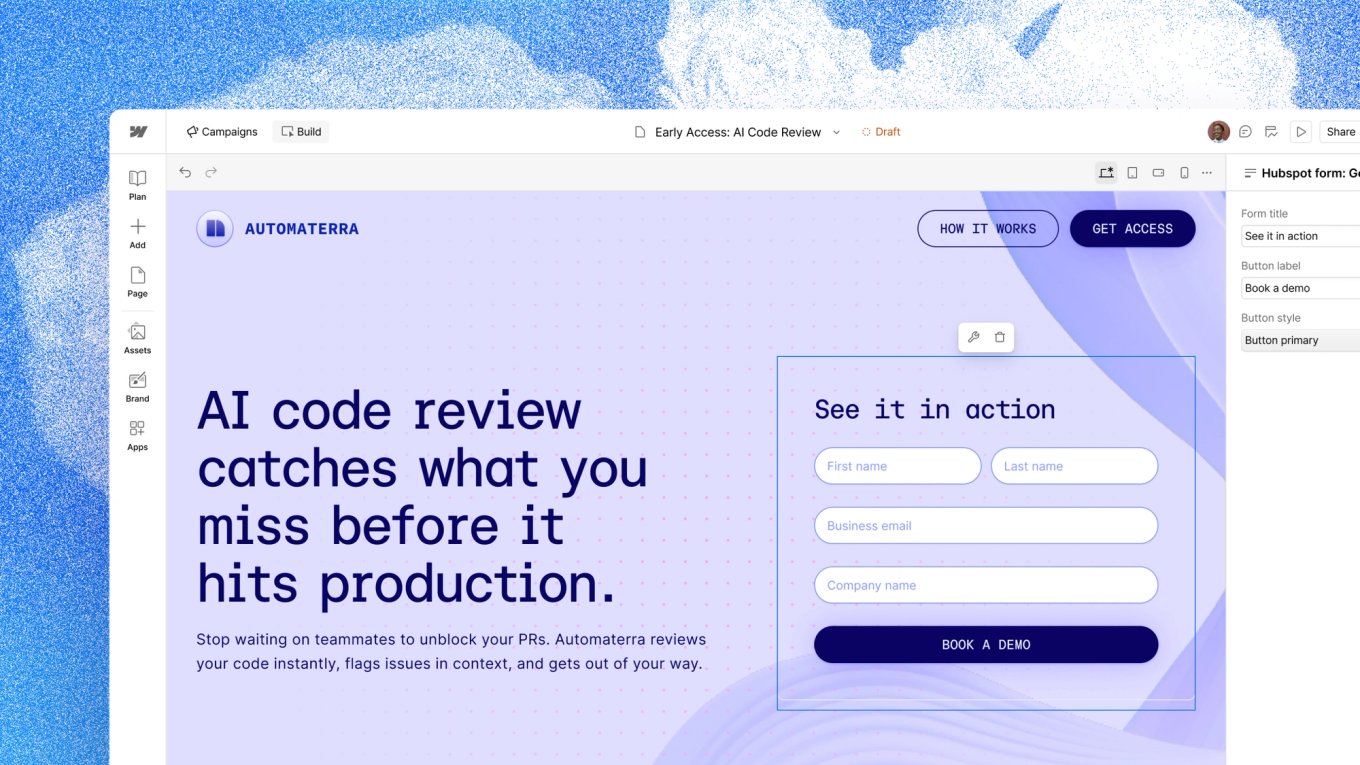
What it is: A single workflow that takes a brief through landing pages, audience variants, and matched ad creative, instead of the usual handoff between a page builder, a design tool, and an ad platform.
Why it matters for B2B SaaS: Point a landing page agent at a Notion doc your product team wrote up, and get back a genuinely distinct use-case or solutions page built for a specific segment, instead of a designer starting from a blank page or a generic template getting reused for every campaign.
Webflow AEO: showing up where buyers actually search now
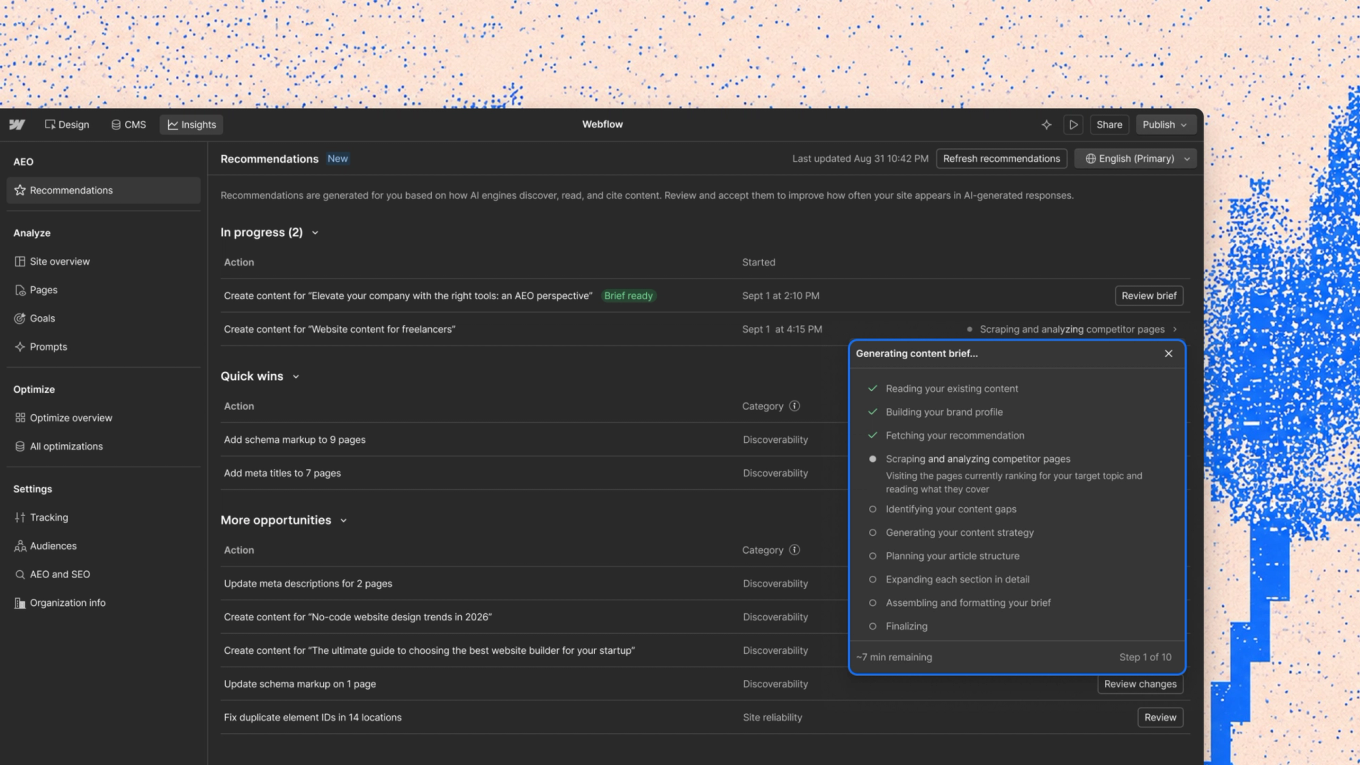
What it is: A tool that tracks where you're being cited, or missed, across ChatGPT, Gemini, and Perplexity, then drafts the content to close the gap directly inside your CMS, instead of adding another standalone AI-visibility tool to the pile.
Why it matters for B2B SaaS: Pricing and product pages become living documents. Add a new tier, and a content agent can update the pricing page to reflect it immediately, so buyers researching you through an AI assistant aren't reading outdated information.
MCP 2.1: agents that work across your whole stack, not one tool at a time
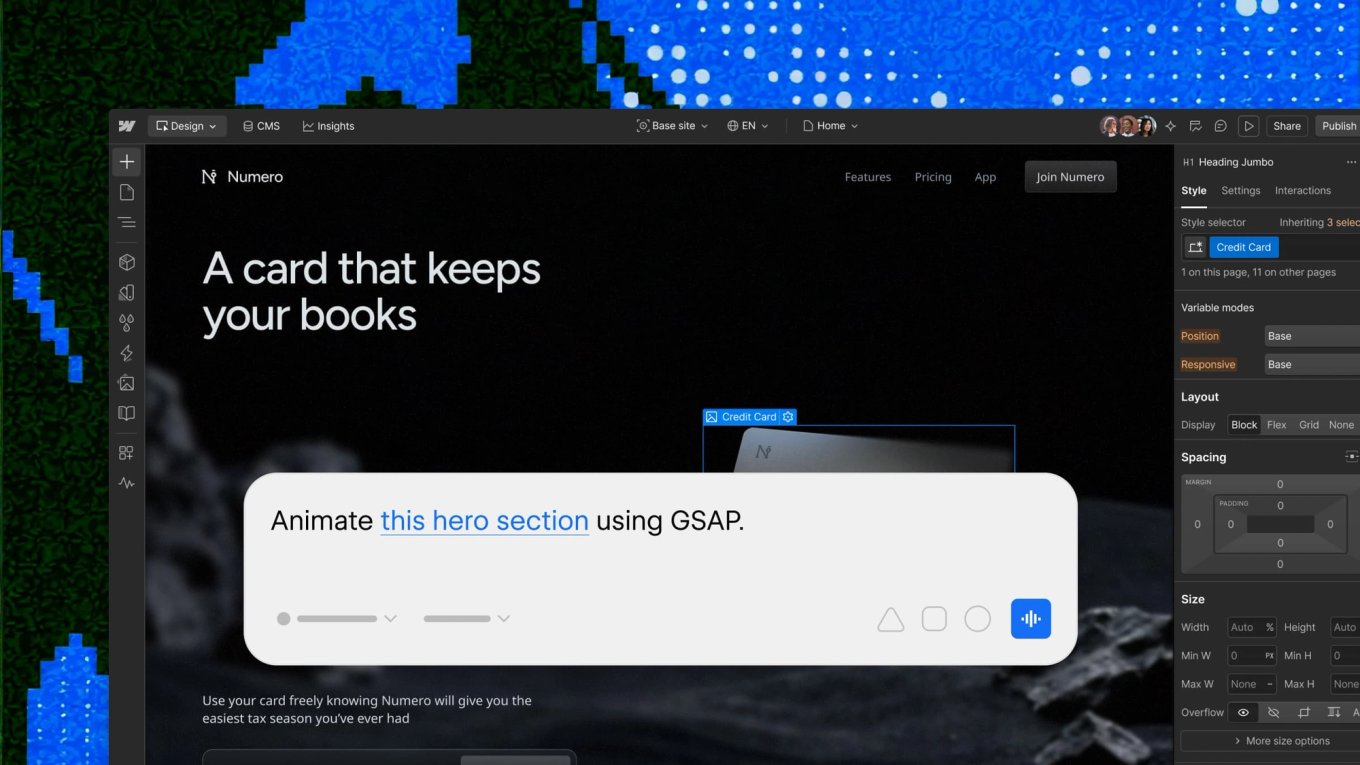
What it is: A protocol that lets agents in Claude, ChatGPT, and Slack act across Source, Campaigns, and AEO together: building, querying content, and deploying.
Why it matters for B2B SaaS: The glue work between tools starts disappearing instead of piling up. Because your brand and design system live in the same environment, updates made by an agent stay on-brand automatically, instead of drifting further from your design system with every quick edit.
None of this replaces strategy, and no platform fully erases stack sprawl on its own. But less stitching between tools means more hours for the work that actually makes an impact.
That's the problem we help B2B SaaS teams solve at MaxxWebStudio: a website system built lean enough to run without a full-time ops person babysitting it.

 Matt Wilson
  Maxx Bethke

